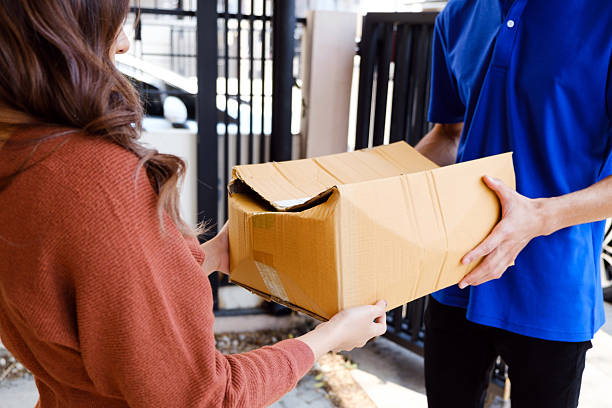
Whether you are sending or receiving shipments, there are important rules and responsibilities that both parties should be aware of.
Everyone wants their shipment to arrive safely, intact, and without complications. However, the sender plays a key role throughout the entire shipping process. Proper preparation and packaging can significantly improve delivery safety and help prevent unnecessary claims, damage, or even loss of the shipment.

⚖️ 1. Correct Measurement and Weight of the Shipment
Before ordering transportation, it is essential to correctly measure and weigh the shipment. Carriers verify the actual dimensions and weight during transit, and any discrepancies may result in additional charges.
📌 We recommend:
- Measuring and weighing the shipment only after it has been fully packed, including all packaging materials.
- Always using the maximum length, width, and height measurements (the package should fit within an imaginary cube or rectangular box).
- Weighing the shipment as accurately as possible.
- Paying close attention if the shipment is close to the carrier’s limits.
⚠️ Incorrect dimensions or weight may lead not only to surcharges, but also to delays in transportation or complications during claims.
In some cases, additional fees may be charged by the carrier incorrectly. Therefore, we recommend taking photos of the shipment before dispatch — ideally including its weight, dimensions, and packaging method.

🛠️ 2. Proper Packaging Is Essential
The sender is responsible for ensuring that the shipment is packed properly and securely. During transportation, shipments pass through multiple hubs, sorting facilities, and manual handling processes, so the packaging must be durable enough to withstand normal transport conditions.
Good packaging significantly reduces the risk of damage during transit.
📦 We recommend:
- Using a sturdy cardboard box.
- Or choosing a “box in box” packaging method.
- Filling all empty spaces with cushioning material.
- Carefully protecting fragile parts of the shipment.
- Reinforcing the bottom and edges for heavier shipments.
⚠️ The contents of the shipment must not move freely inside the package.
Poor or insufficient packaging is unfortunately one of the most common reasons for claim rejection.
📌 The shipment should be packed well enough to withstand standard handling during transport — including drops from heights of up to 1.5 meters.

🏷️ 3. Properly Attached Shipping Label
Every shipment must have a correct shipping label attached. The label must be clearly readable and securely attached so it cannot fall off or become damaged during transit.
Lost or unreadable labels are among the most common causes of shipping problems.
📌 We recommend:
- Using the correct label format for the type of shipment (A5, A6).
- Using stretch wrap when packaging (note: some services charge extra for this type of packaging).
- Using a shipping pouch/sleeve.
- Or securely covering the label with transparent tape.
- Applying the label straight and without folds — ensuring the barcode is not bent or wrinkled.
- Removing all old labels and barcodes from reused boxes.
- Marking the package with your own label containing the sender’s and recipient’s addresses.
⚠️ Labels often peel off automatically from recycled or “hairy” cardboard boxes. Therefore, make every effort to ensure the label stays attached.

📸 4. Shipment Photo Documentation
A simple step that can significantly help in the event of a claim or dispute with the carrier.
Before handing over the shipment, we recommend taking photos of:
- The shipment contents.
- The internal packaging.
- The external packaging including the shipping label.
- The shipment’s weight and dimensions for any future disputes regarding carrier measurements.
📷 Photo documentation can be extremely important during claims procedures.

✍️ 5. Request Proof of Shipment Collection from the Courier
📄 When handing over the shipment to the courier, the sender should always request proof of collection stating the number of packages received.
📌 It is important that the document clearly states how many parcels the courier actually accepted for transport. Occasionally, a package may get lost during transit, and the carrier may later claim that it was never collected.
📄 Keep this receipt carefully — it is the only proof confirming that the carrier accepted the shipment.
❗ Please note: couriers often do not carry any collection confirmation forms.
📌 We recommend:
- Printing the shipping labels twice.
- Or using a master manifest listing the number of parcels and total weight.
- Having the document signed by the courier (ideally with printed letters, date, and signature).
- You may also use our handover protocol form. (Although couriers generally dislike it.)

💰 6. Be Aware of Shipment Insurance
Many customers do not realize that the carrier’s basic liability coverage is usually quite limited — often only around EUR 10–20 per kilogram of shipment weight.
⚠️ Even “All Risk” insurance does not automatically guarantee compensation. If insufficient packaging is proven, the claim may still be rejected.
🔒 If you are shipping valuable goods, we strongly recommend additional insurance coverage. However, the best prevention is always high-quality packaging.
Additional insurance can be arranged:
- By email.
- Or directly in the my BUBO system by selecting the “Insure shipment” option.

⚠️ 7. Some Types of Goods Have Limited Insurance Coverage
For certain types of goods, carriers provide limited insurance coverage, often capped at approximately USD 1,000.
Even if the shipment is insured for its full value, some goods may still fall under carrier or insurance exclusions and limitations. These exclusions are not determined by BUBO trans, and our system cannot automatically evaluate them. All insurance conditions are always governed by the current terms and conditions of the selected carrier.
This applies especially to:
- Jewelry 💍
- Electronics 💻📱
- Glass and porcelain 🍷
- Artwork 🎨
- Musical instruments 🎸
- Antiques
- Collectibles
For such shipments, we strongly recommend excellent packaging, proper insurance coverage, and extra caution.
📌 If needed, we will gladly verify with the carrier whether the shipment can be fully insured and under what conditions.

📬 8. Informing the Recipient
Part of the sender’s responsibilities is also informing the recipient about the shipment dispatch.
The recipient should receive:
-
The shipment tracking number.
-
Information about the planned delivery.
-
Instructions on how to proceed if the shipment arrives damaged or incomplete.
-
For non-EU shipments, information that customs clearance and communication with customs authorities or brokers must be actively handled.
-
Contact details for the local carrier branch.
-
📌 Recipients can usually find contact information on:

👤 9. Recipient Responsibilities Before Delivery
📞 In the event of transportation complications, delivery changes, or the need to clarify delivery details, the recipient should contact the local carrier branch as soon as possible and actively resolve the issue directly in the destination country.
❗ For shipments outside the EU, the recipient may be required to pay customs duties, VAT, or other customs-related fees. If the recipient does not actively communicate with customs authorities, brokers, or the carrier, and customs formalities or payments are not completed on time, this may result in:
- Significant shipment delays.
- Storage fees and additional charges.
- Return of the shipment to the sender, including return shipping costs.
- Destruction of the shipment under customs supervision.
- Rebilling of destination-related costs back to the sender — even if the recipient has already accepted the shipment.
- These situations most commonly occur with shipments to the USA.
📌 Therefore, it is also in the sender’s best interest that the recipient actively cooperates during customs clearance and delivery.

📦 10. Recipient Responsibilities Upon Delivery
When receiving a shipment from the courier, the recipient should:
- Inspect the shipment immediately.
- Check the packaging condition and any signs of damage.
- In case of doubt, accept the shipment only with reservation and immediately complete a physical damage report with the courier.
- If the recipient refuses to accept the shipment, it may be returned to the sender at the sender’s expense or even destroyed.
📦 Even if the shipment shows no visible signs of mishandling, we recommend unpacking it immediately after delivery and checking the contents as well.
📸 In the event of damage or partial loss, we recommend thoroughly photographing everything — including the outer packaging, filling materials, shipping label, and the goods themselves.
📅 If damage is discovered, the recipient should contact the sender and report the damage no later than within 3 business days.
⚠️ The recipient must also retain the damage report, all packaging materials, and the shipment itself. The goods should not be used or further handled until the claim process or any carrier inspection has been completed.
Failure to meet these obligations significantly reduces the chances of a successful claim.

📝 11. Filing a Claim
If the shipment arrives damaged, incomplete, or becomes lost, the claim should be reported as soon as possible.
To successfully process a claim or shipment investigation, we will require as many details as possible, including:
- A detailed description of the shipment contents.
- A description of the damage or missing goods.
- The value of the goods and calculation of damages.
- Photos of the damage or missing items.
- Photos of both external and internal packaging.
- A damage report completed with the courier.
- An invoice or other document proving the value of the goods.
📸 Photo documentation is extremely important and significantly speeds up the claim process. We recommend taking photos even before shipment dispatch.
⚠️ All packaging materials, boxes, and fillers must be retained. In some cases, the carrier may send a courier for an additional inspection and may even take the shipment back to the depot for further assessment.
📅 Claims should be handled without unnecessary delay — the earlier a claim is reported, the higher the probability of successful resolution. In most cases, claims should be reported within 3 business days.

✅ Conclusion
Proper shipment preparation only takes a few minutes, but it can save a great deal of trouble, claims, and unnecessary costs.
If you are unsure about packaging, insurance, or shipping conditions, we at BUBO are always happy to help 😊